
- What is the building doing today, and how confident are we in the data?
- Where is the asset leaking cost, value, rating readiness, reporting confidence, or compliance headroom?
- Which opportunities deserve action now, which need more evidence, and which should be parked?
- What delivery route, supplier type, finance pathway, or certification step should happen next?
- What proof will the board, lender, investor, tenant, assessor, or regulator accept?
Performance Review
The Performance Review.
A scoped, decision-grade plan for one building or a portfolio. We take your bills, meter data, BMS history, maintenance records, site context, and commercial objective. Back comes a Performance Plan: ranked opportunities, confidence levels, evidence gaps, M&V design, and the specific next move, whether that is saving money, making money, certifying, reporting, or complying.
Across NZ, AU, and the UK: NABERSNZ, NABERS Energy, PAS 2038, GRESB, and Awaab's Law in housing. The Review is the start of the chain, and Tether stays on it.

- Scope
- 1 to 50+
One asset to a 50+ building portfolio. Scoped per call, before any commitment, against data condition, market, and the decision the Plan needs to support. Confirmed in writing.
- Duration
- 3-6 weeks
Three to six weeks for a single building once data and site access are confirmed. Portfolio engagements typically run eight to twelve weeks for 10-25 buildings, with diagnostics rolling site by site.
- Output
- 25-40 pp
A Performance Plan: ten to twenty ranked opportunities, an evidence register, an M&V plan, and a board decision page every claim can trace back to source records.
Decision brief
The Plan answers the questions that block action.
The useful output is not a longer report. It is a clear view of the current state, the commercial opportunity, the confidence level, the gaps, and the next move, written so a finance lead and an assessor can interrogate the same claim.
Bills and tariffs
Electricity, water, gas, demand, tariff, and invoice records, checked against operating schedules and known asset changes.
Meters and BMS history
Interval data, BMS exports, plant schedules, after-hours loads, alarms, sensor drift, and sub-metering coverage where it exists.
Site and maintenance context
Maintenance records, tenancy schedules, access constraints, previous reports, floor area records, and the operating reality the Plan has to survive.
- It is not a generic energy audit that ends with a list of ideas.
- It is not a dashboard sale or a sensor pitch. Sub-metering only lands if the target outcome needs the evidence.
- It is not a rating promise before the evidence supports the pathway.
- It is not a capital plan that ignores access, suppliers, operations, or proof.
- It is not a sustainability checklist for an ESG report. The Plan is built for finance teams, not for ESG narrative.
Who it is for
Built for the people who need the decision to hold.
One Plan, read five ways. Each role gets the same evidence base, framed for the decision in front of them.
-

Owners and investors
A defendable view of where the asset is leaking value, where better performance can support return, and what evidence belongs in front of a board, bank, or buyer.
-

Asset and property teams
A practical sequence for tuning, maintenance, certification, reporting, and supplier work without burying the team in loose recommendations.
-

Operations teams
A grounded plan that respects uptime, access, existing systems, incumbent contractors, and the people holding the building together every day.
-

ESG and reporting leads
A source-of-truth pathway for energy, carbon, ratings, compliance records, and evidence that can be checked after the first slide is gone.
-

Lenders and capital partners
An evidence pack that can sit behind green loans, capex requests, carbon-credit diligence, or value-protection decisions without asking finance to trust a narrative.
What's in the Plan
A walk-through of the deliverable, page by page.
The Plan is built so the buyer can picture what arrives at the end: not a wall of recommendations, but a sequence from evidence to decision to verified outcome.
Book your Review- 01 pp. 1-6
Current-state evidence
Energy, water, gas, BMS, occupancy, and maintenance data drawn from existing records: bills, meters, BMS exports, invoices, contracts, and the site walk. The Plan opens with baseline kWh/m², peak and off-peak split, after-hours load fraction, rating starting position, and a data-quality score. Source records are listed and dated. Nothing is called measured if the underlying data is modelled or assumed.
- 02 pp. 7-10
Outcome pathway
The asset is mapped against the outcomes that matter: save money, make money, certify, report, comply. Each pathway names what is in scope, what is out, the confidence we can give today, and the evidence still needed. If a NABERSNZ rating is the goal, the eligibility check is stated before any rating commitment.
- 03 pp. 11-22
Ranked opportunities
Ten to twenty opportunities, ranked by confidence, practicality, operating impact, commercial relevance, and delivery sequence. Each item includes the estimate and range, evidence, disruption profile, supplier or trade pathway, prerequisites, and M&V approach. Tuning, controls, and metering wins come first; capital cases come second.
- 04 pp. 23-25
Evidence gaps
What the Plan does not yet know, and what would close the gap. Sub-metering recommendations only land here if the target outcome needs the evidence. The Plan never recommends sensors for their own sake.
- 05 pp. 26-32
Delivery route
The next moves, separated into tuning, data work, certification preparation, capital works, partner delivery, and measurement. The Plan names suppliers, assessors, finance pathways, and internal owners where appropriate, and flags where Tether can hold the chain through delivery.
- 06 pp. 33-36
Board-ready summary
One decision page: what the asset is doing, what is recommended, cost and timing, confidence, risks, and the proof points the board, lender, or investor will see when it lands. The page a CFO can read in under five minutes.
- 07 appendix
M&V design
How the result will be measured: baseline method, weather and occupancy adjustments, variance reporting, and the IPMVP option where it applies. This is what makes a saving claim survive lender diligence.
The Review is only useful if it can move from data, to decision, to delivery without losing the thread.
How the Review runs
Procurement-friendly, building-specific, and honest before it starts.
The scope call is part of the method. We confirm the question, the evidence, the likely effort, and whether Tether is the right fit before there is a proposal to accept.
-
 01 week 0
The scope call
30-45 minutes. You bring the asset, the commercial objective, and a sense of what evidence already exists. We bring the questions the Plan has to answer and the data needed to answer them. Scope, timing, and fees are confirmed in writing within one working day. If Tether is not the right fit, we say so on the call.
-
 02 weeks 1-2
Data and site walk
You hand over bills, meter data, BMS exports, maintenance logs, tenancy schedules, and previous reports. We walk the building, or representative buildings for a portfolio, with the operations team and capture where BMS, meters, or sub-metering have drifted from the documented state.
-
 03 weeks 2-4
Diagnosis and ranking
Tether specialists read the data, model the building, and rank the opportunity set against the five outcomes. The team can include accredited NABERSNZ assessors, PAS 2038-aware engineers, and an M&V lead where the target outcome needs them.
-
 04 week 5-6
Plan delivery and review
We send the Plan, walk it through with the stakeholders who need to see it, and answer questions before anyone commits to work. If the answer is do not proceed, the Plan supports that decision too, with evidence.
What Tether has actually done
The Plan, proven on real assets.
The Performance Review is the natural first engagement because Tether has already had to connect diagnosis, finance evidence, rating readiness, and delivery on named buildings.
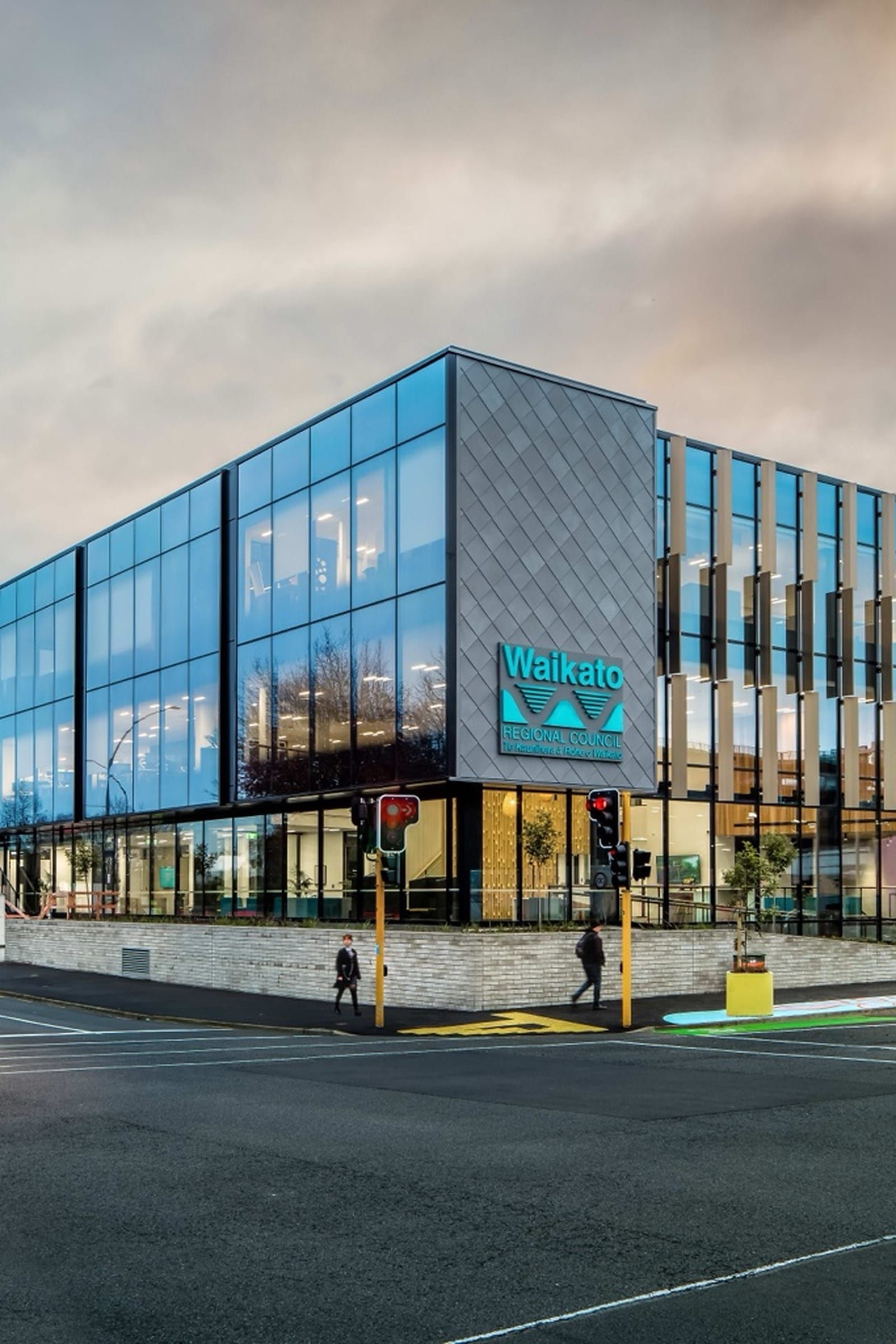
Mackersy Property - Tristram Precinct
A Hamilton precinct started from a 2.0-star NABERSNZ base. An Opportunity Scan turned existing BMS data into a costed pathway: ~37% energy reduction, ~$92k a year in projected savings, no major capex, and finance-ready documentation to support a green loan application.
- Saving
- ~$92k/yr
- Payback
- No major capex
- Rating / proof
- NABERSNZ 4.5 target
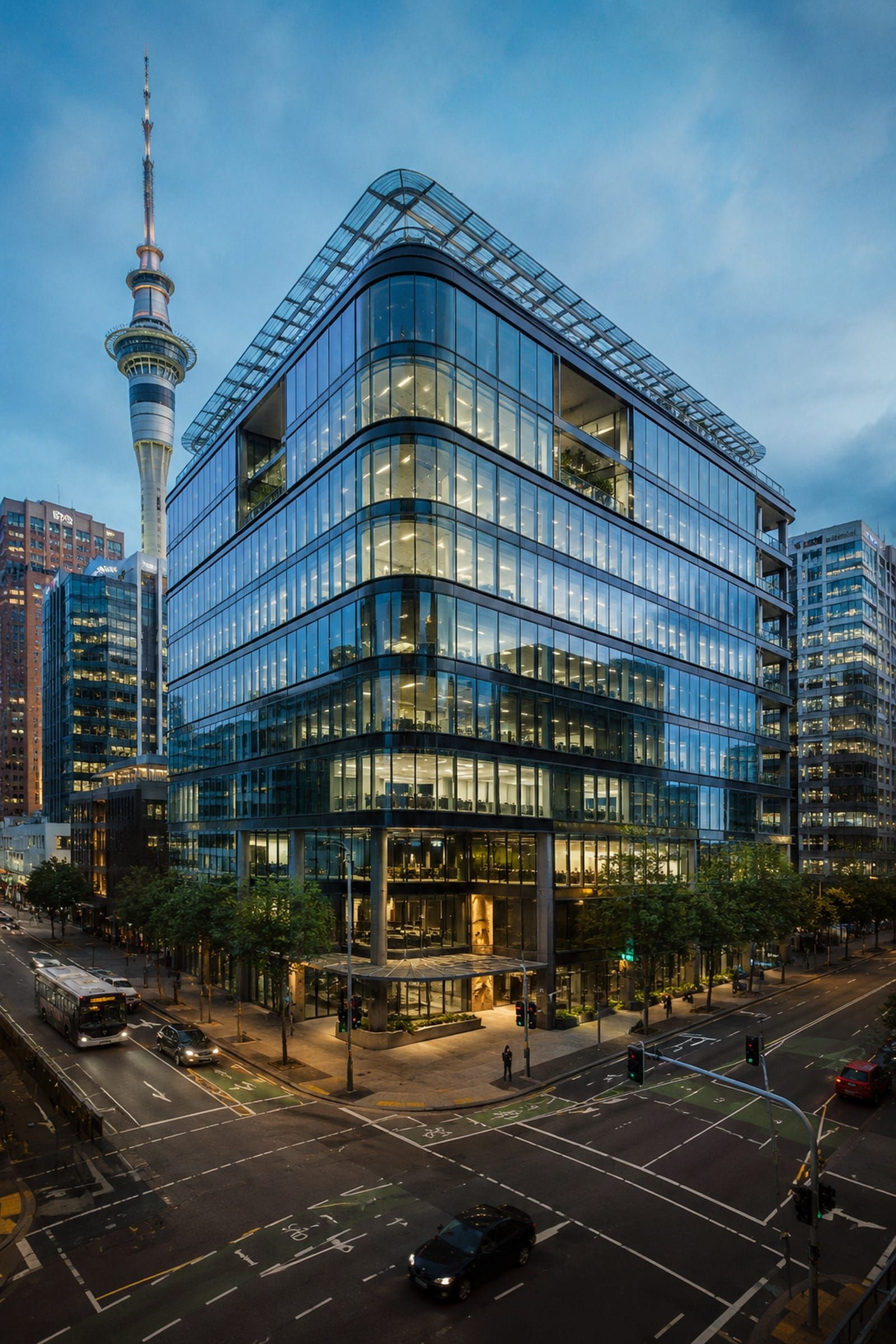
Auckland CBD A-grade office
An A-grade tower lifted a full star on its NABERSNZ rating without major capex. BMS tuning, after-hours profile changes, and tenant comfort feedback did most of the work.
- Saving
- $148,000 / yr
- Payback
- 5 months
- Rating / proof
- NABERSNZ 4.5
Outcome lens
Five reasons to act, each with proof behind it.
The Plan always points at one of five commercial outcomes. Each is already proven on a real building.
- Save money $148k/yr verified
Find avoidable cost, fix what's worth fixing, keep the saving visible.
See the outcome - Make money $412k/yr blended
Stronger assets, cleaner finance evidence, and value routes that start with building reality.
See the outcome - Certify NABERSNZ 3.5 to 4.5
NABERSNZ, NABERS Energy, and PAS 2038 pathways prepared honestly.
See the outcome - Report IPMVP-aligned baseline
Reporting that survives the second question because the evidence is already attached.
See the outcome - Comply Awaab's Law mapped
Obligations translated into dated actions, named owners, and an audit trail.
See the outcome
Common questions
Scope, cost, data, delivery, and the team.
Pick a topic. Everything below is confirmed against your asset on the scope call before any commitment.
- How is a Performance Review scoped?
- Scope is set by building type, portfolio size, market, data condition, site access, and the level of assessment required. We confirm scope by call before work begins.
- How long does it take?
- Three to six weeks is typical for a single building once data access, site access, and stakeholders are confirmed. Portfolio work is scoped around asset count and consistency of available data.
- What does a Performance Review actually cost?
- Single-building Reviews are scoped by data condition, market, and the level of assessment required. Most single-asset engagements sit in the low-to-mid five-figure range in NZD, confirmed on the scope call before any commitment. Portfolio Reviews are priced per asset with volume scaling.
- Do we need to install sensors first?
- No. Tether starts with existing bills, meters, BMS history, records, and site context. New metering or sensing is only recommended where the target outcome needs stronger evidence.
- What if our data isn't very good?
- Most building data is imperfect. The Plan tags claims as measured, modelled, or assumed, then names the evidence gaps that would lift confidence. The Review tells you which decisions the current data can support and which need stronger evidence first.
- What do you deliver at the end?
- A Performance Plan covering current performance, priority opportunities, confidence levels, evidence gaps, outcome pathway, M&V design, and recommended next steps.
- Can it support certification or compliance?
- Yes, where the building and market pathway fit. The Plan can prepare data, evidence, and next steps for NABERSNZ, NABERS Energy, PAS 2038, reporting, and compliance work, but no result is promised before the evidence supports it.
- What happens after the Plan?
- You can keep the Plan as a decision document, ask Tether to coordinate delivery, use it to brief partners, or use it to decide not to proceed. The next step is always tied to evidence and confidence.
- Who actually runs the Review?
- A Tether team led by a building performance specialist. Depending on the asset and target outcome, the team includes accredited assessors, market specialists, and an M&V lead. The specialist who runs your Review is the person who can hold the chain through delivery if you continue.
Book your Performance Review
Tell us the asset and the decision.
Share the building, market, asset type, and decision you need to make. We reply with the right scope, timing, and next step.
- Scoped against your building, never a template.
- Every claim arrives with its confidence and evidence.
- A proposal only after the scope call confirms the work fits the asset.