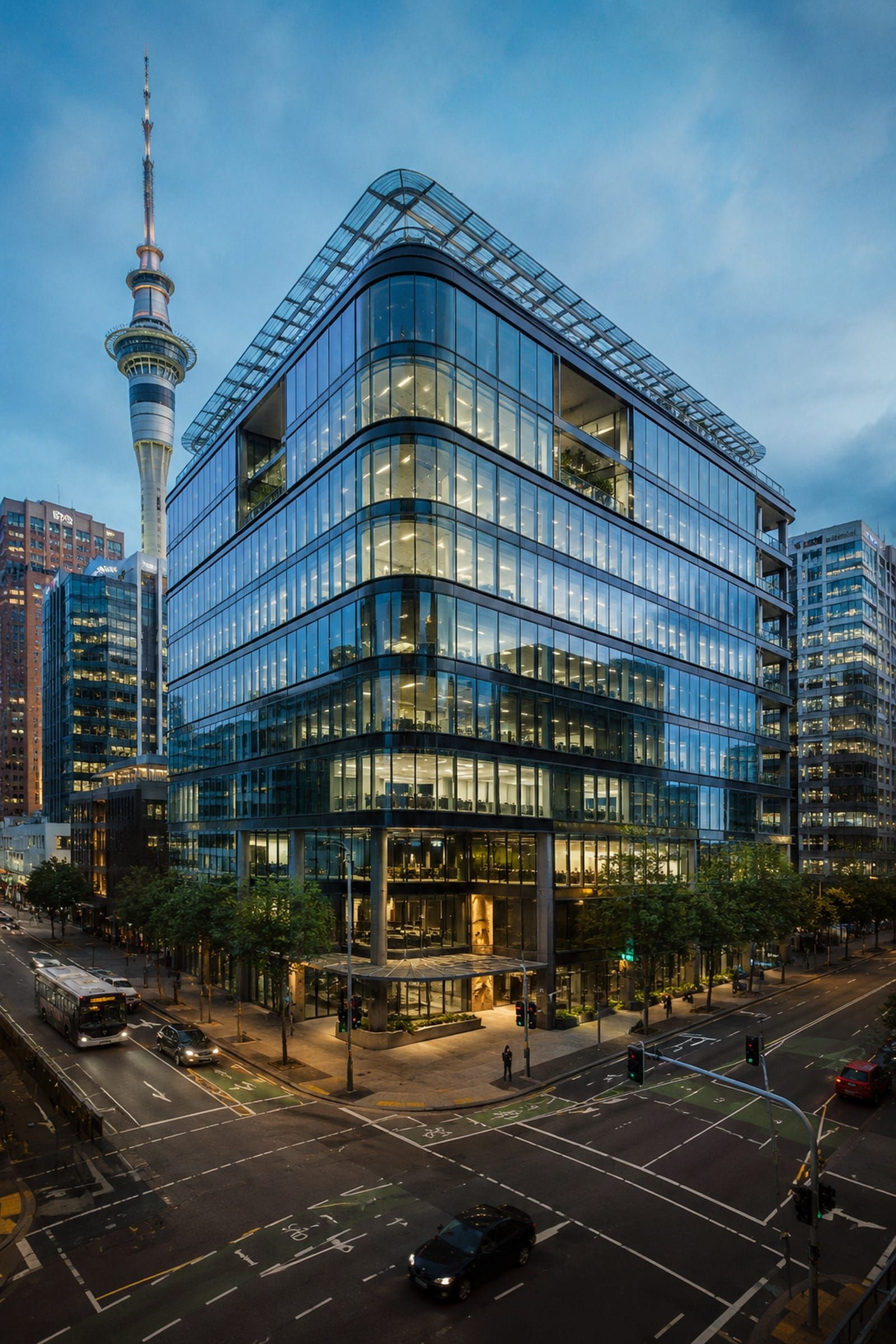

The asset
Tristram Precinct in Hamilton, a Mackersy Property asset. The owner wanted to begin a NABERSNZ journey from a 2.0-star base rating, with three commercial goals: unlock access to sustainable finance, attract premium tenants who expect strong ratings, and reduce operating cost. The constraint was clear: no major capex, no disruptive works.
What the scan found
Tether ran a rapid Opportunity Scan using existing BMS data and short-term metering. The data revealed that only 40% of gas and 50% of base-building electricity was being consumed during business hours. The work to recover that drift was operational, not capital: align HVAC and boiler schedules with occupancy, introduce after-hours zoning and chargeback controls, and target lighting and baseload inefficiencies. The NABERS Prediction Tool was used to model the rating uplift and track progress against the 4.5-star target.
What we delivered
Tether integrated with the existing BMS, filled data gaps with targeted sensors, and packaged the performance data into finance-ready documentation that supported the green loan application. Practical, low-effort recommendations were sequenced first. Ongoing monitoring keeps compliance simple and the gains sustained year after year.
The numbers
- Predicted energy reduction of ~37% from operational changes alone
- Annual savings potential of ~$92,000
- No major capex required to access the operational tranche
- NABERSNZ rating moving from 2.0 toward a 4.5-star target
- Green loan application supported by validated, finance-ready evidence
Why it worked
The scan started from what the building was already doing, not from what could be installed. Once the gap between scheduled hours and trading hours was visible, the cheap work was the obvious work. The capital decision came later, and it came with evidence.